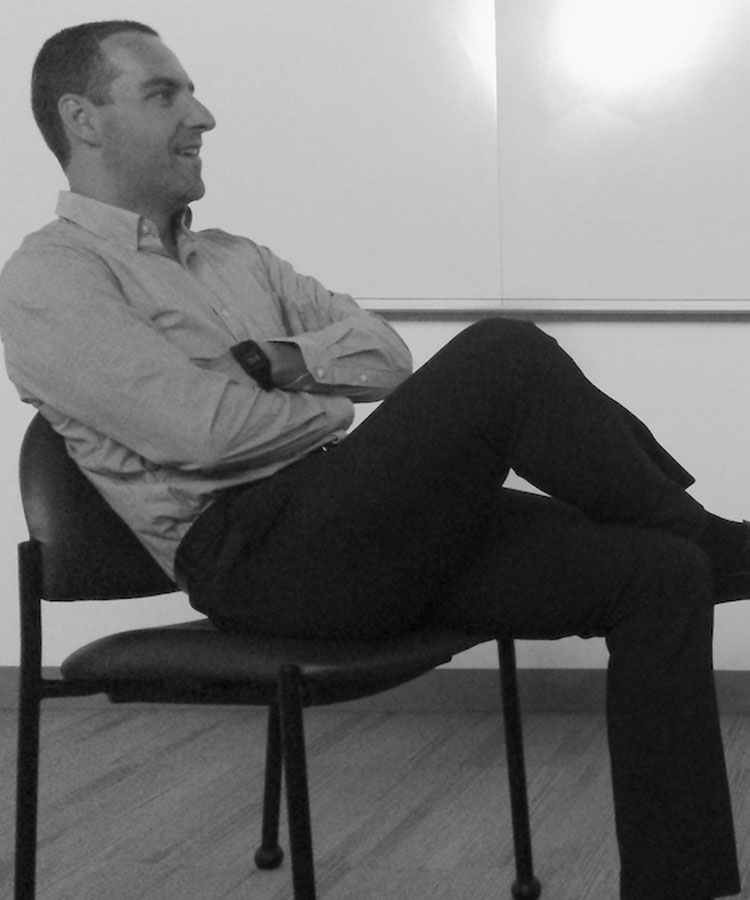
Jared Rhoads
Health Policy • Public Health • DiscourseI teach, research, and write about health policy, with a focus on issues involving markets, choice, and innovation. A sub-area in which I am particularly interested right now is the study of health policy attitudes and discourse.
Currently I teach and mentor graduate students in the Master of Public Health (MPH) program at The Dartmouth Institute for Health Policy and Clinical Practice (TDI) in Hanover, New Hampshire. Prior to that, I worked in industry, consulting on healthcare technology and health policy.
I enjoy collaborating with organizations and individuals with whom I have shared values and interests. Presently I am a senior affiliated scholar with the Mercatus Center at George Mason University in Virginia, and I run the speech and debate program in economics and public policy for the Calvin Coolidge Presidential Foundation in Vermont. I believe that the best way to bring about a world in which everyone can thrive is to cultivate a free and liberal society with well-functioning markets, and that advocates of this perspective have an enormous amount of work to do to develop these ideas and communicate them clearly and effectively.
If you would like to get in touch or work together, write to me.
Policy Papers & Reports
Jared Rhoads, "Enhancing Healthcare Options in New Hampshire: The Direct-Pay Pathway" St. Anselm Center for Ethics and Society. November 15, 2022. [Single PDF version]
Darcy Bryan, Jared Rhoads, and Robert Graboyes, "Improving Healthcare Access in the States after COVID-19" The Mercatus Center at George Mason University. July 15, 2020.
Darcy Bryan, Jared Rhoads, and Robert Graboyes, "COVID-19 Health Policy Recommendations: Increasing Access to Care in the States" The Mercatus Center at George Mason University. March 24, 2020.
Jared Rhoads, "Right-to-Shop for Public Employees: How Health Care Incentives Are Saving Money in Kentucky" The Foundation for Government Accountability. March 8, 2019.
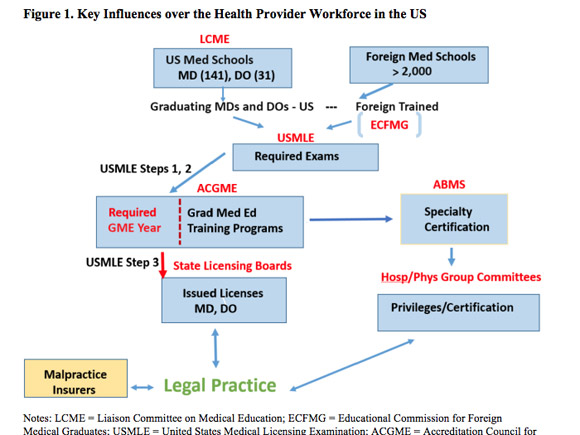
Jeffrey Flier and Jared Rhoads, "The US Health Provider Workforce: Determinants and Potential Paths to Enhancement" The Mercatus Center at George Mason University. February 20, 2018.
Darcy Bryan, Jared Rhoads, and Robert Graboyes, "Healthcare Openness and Access Project: Mapping the Frontier for the Next Generation of American Health Care" The Mercatus Center at George Mason University. December 1, 2016.
Julie Bynum, Ellen Meara, Chiang-Hua Chang, and Jared Rhoads, "Our Parents, Ourselves: Healthcare for an Aging Population. A Report of the Dartmouth Atlas Project" The Dartmouth Institute for Health Policy and Clinical Practice. February 2016.
Academic Publications
Duska, M., Rhoads, J. Saunders, E. Onega, T., "State Naloxone Co-Prescribing Laws Show Mixed Effects on Overdose Mortality Rates" Drug Science, Policy and Law, Summer 2022
Flier J., Rhoads J., "The US Health Provider Workforce: Determinants and Potential Paths to Enhancement" Perspectives in Biology and Medicine, 63:4, Fall 2020
Rhoads, J. "Viewpoint Diversity: Donating Free-Market Materials to University Libraries" Academic Questions, Winter 2019, 32:4
Braga M., Tyler M., Rhoads J., Cacchio M., Auerbach M., Nishisaki A., Larson R., "The effect of just-in-time simulation training on provider performance and patient outcomes for clinical procedures: a systematic review" BMJ STEL, October 2015
Book Reviews
Review of the book Priceless: Curing the Healthcare Crisis, by J. Goodman. The Objective Standard. Summer 2013.
Review of the book Why ObamaCare is Wrong for America, by Turner, et al. The Objective Standard. Summer 2011.
Testimony
"Testimony on Nonresident Occupational Licensing Requirements Relating to Barbering, Cosmetology, and Esthetics" New Hampshire House of Representative Executive Departments and Administration Committee. January 17, 2023.
"Direct Primary Care Offers Great Benefit to Montanans" Montana House of Representatives Committee on Business and Labor. The Mercatus Center at George Mason University. February 9, 2021.
"Testimony to the Massachusettes House of Representatives on Telemedicine and Cybersecurity" Massachusetts House of Representatives, Committee on Technology and Intergovernmental Affairs. The Mercatus Center at George Mason University. July 18, 2019.
"Better Health for More People at Lower Cost, Year after Year" Congressional Testimony to the Senate HELP Committee. The Mercatus Center at George Mason University. February 28, 2019.
Public Interest Comments
"Studying and Deploying Telehealth: Promoting Telehealth for Low-Income Consumers." Jared Rhoads. August 26, 2019.
"CMS Regulatory Changes to Promote Program Efficiency." Jared Rhoads. December 21, 2011.
"FTC Proposed Agreement for Phusion Projects Four Loko." Jared Rhoads. December 1, 2011.
"FDA Approach to Reducing Sodium Consumption." Jared Rhoads. November 20, 2011.
"CMS Establishment of a COOP Program." Jared Rhoads. September 6, 2011.
"FDA Approach to Regulating Mobile Health Applications." Jared Rhoads. July 11, 2011.
Assorted Self-Published Writings
"Annotated Index of Health and Medicine in Objectivism (AIHMO)" by Jared Rhoads. Working Draft 2018-Present. (Not publicly available right now; copyright situation unclear with regard to the quoted passages.) 22pp
"Divergence and Reconvergance: Health Disparities Before and After German Reunification" by Jared Rhoads. December 8, 2015.
"Guidance on the Use of Antibiotics in the Production of Animals for Food" by Jared Rhoads. March 16, 2015.
"How I Would Vote on the 2012 State Ballot Initiatives Related to Health Policy" by Jared Rhoads. October 23, 2012.
"A Better Way to Do Early Primary Political Debates" by Jared Rhoads. October 27, 2011.
"The Quotable and Likable Calvin Coolidge" by Jared Rhoads. February 1, 2011.
"A Television Series Recommendation: Bramwell" by Jared Rhoads. October 23, 2010.
Short Articles
Jared Rhoads and Darcy Bryan, "Direct care is good for Montana" The Daily Montanan. February 17, 2021.
Jared Rhoads and Elise Amez-Droz, "A commonsense solution for health care coverage in the wake of the pandemic" The Hill. July 5, 2020.
Jared Rhoads and Elise Amez-Droz, "To Make a Difference in Health Policy, Look First to the States" The Bridge. Mercatus Center at George Mason University. April 8, 2020.
Jared Rhoads, "Silver Linings in State Responses to COVID-19" The Objective Standard. April 2, 2020.
Jared Rhoads, "Calvin Coolidge's Speech to American Doctors: Praising Medicine and Venerating Reason" Calvin Coolidge Presidential Foundation. May 17, 2017.
Jared Rhoads, "Insurance Not Accepted: The Direct Primary Care Model" Benjamin Rush Institute. November 11, 2014.
Jared Rhoads, "The Medical Context of Calvin Jr.'s Untimely Death" Calvin Coolidge Presidential Foundation Blog. July 7, 2014.
Jared Rhoads, "New Essay by John David Lewis: 'There is No 'Right' to Healthcare'" The Objective Standard. September 4, 2013.
Jared Rhoads, "Cyber-Criminals Target Health Care Information" Baseline Magazine. March 27, 2013.
Jared Rhoads, "For True Cybersecurity, Go Beyond the Risk Assessment" Electronic Health Reporter. January 21, 2013.
Jared Rhoads, "Security Risk Assessments in Five Steps" Baseline Magazine. May 16, 2012.
Jared Rhoads, "Fact-checking Mitt Romney on the Massachusetts individual mandate" The Daily Caller. January 28, 2012.
Jared Rhoads, "What we can learn from failures like the CLASS Act" American Thinker. October 20, 2011.
Jared Rhoads, "New HIPAA rules won't enhance privacy, but they will burden physicians" KevinMD. September 11, 2011.
Jared Rhoads, "Technology Cornerstones to Support Tomorrow's Healthcare" Health News Digest. March 2010.
Fran Turisco and Jared Rhoads, "Implementing EHRs, What Can the U.S. Learn from Europe" ADVANCE for Health Information Professionals. September 2009.
Jared Rhoads and Jane Metzger, "Personal Health Records: Prospects and Challenges for Health Plans" AHIP Coverage. January-February 2007.
e-Books
Books About Healthcare. Brief reactions and reflections on books on healthcare. Jared Rhoads. 2014. 45pp
Health Policy Matters. A collection of short pieces on contemporary issues in health policy. Jared Rhoads. 2012. 79pp
Industry Research Reports
Jared Rhoads and James Kuhn, "When Hospitals Merge: Turning Challenges Into Opportunities for IT Excellence" Computer Sciences Corporation. March 2014.
Jared Rhoads, "Achieving Comprehensive Health IT Privacy and Security" Computer Sciences Corporation. April 2013.
Kent Kubie, Mike Garzone, Paul Gray, and Jared Rhoads, "Cloud Computing in the Healthcare Environment" Computer Sciences Corporation. February 2013.
Jared Rhoads, "Survey on Social Media Use by U.S. Hospitals and Health Systems" Computer Sciences Corporation. September 2012.
Freddy Lykke, Martin Holzworth, Marianne Rosager, Jared Rhoads, and Fran Turisco, "Telemedicine: An Essential Technology for Reformed Healthcare" Computer Sciences Corporation. May 2011.
Jared Rhoads and Erica Drazen, "Using Tracking Tools to Improve Patient Flow in Hospitals" California Healthcare Foundation. April 2011.
Jared Rhoads and Erica Drazen, "Touchscreen Check-In: Kiosks Speed Hospital Registration" California Healthcare Foundation. March 2009.
Fran Turisco and Jared Rhoads, "Equipped for Efficiency: Improving Nursing Care Through Technology" California Healthcare Foundation. December 2008.
Keith MacDonald, Erica Drazen, and Jared Rhoads, "When I'm 64: How Boomers Will Change Health Care" American Hospital Association. May 2007.
Letters to the Editor
"Banning Flavors Would Undo the Public Health Benefit of e-Cigarettes" Jared Rhoads. Submitted to NEJM February 2019, Unpublished.